Malacostraca |
Decapoda |
Grapsidae
Miljö: miljö / Klimatzon / djupintervall / distributionsområde
Ekologi
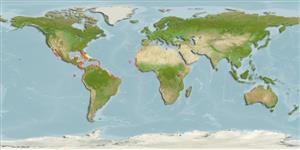
Benthic; djupintervall 0 - 5 m (Ref. 106471). Tropical; 40°N - 35°S, 126°W - 28°E
Indo-Pacific and Atlantic: from Baja California (Mexico) to Chile, including Clipperton Island, Galapagos Islands and other Pacific oceanic islands; from south Florida to central America, West Indies, to Colombia, Venezuela and Brazil, to western Africa and Portugal, including Azores, Cape Verde, Sao Tome and Principe, Ascension and Saint Helena. Subtropical and tropical.
Längd vid första mognad / Storlek / Vikt / Ålder
Könsmognad: Lm ?, range 3 - 3.38 cm Max length : 7.7 cm CL hane/ej könsbestämd; (Ref. 435)
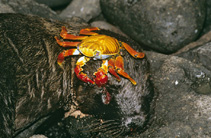
Maximum carapace width: 8.7 cm. Inhabits rocks near water line and is very active on land, taking refuge in the sea when threatened (Ref. 435). Supralittoral to intertidal (Ref. 104055). Abundant in splash zones (Ref. 105697). On rubbles (Ref. 106471). Feeds on cirripedes, mytilids, and porcelain crabs; occasionally acts as a scavenger. Also preys upon sea turtles and on the lookout for marine birds nest (Ref. 106452). Herbivorous (Ref. 106455).
Livscykel och parningsbeteende
Könsmognad | Reproduktion | Lek | Ägg | Fekunditet | Larver
Members of the order Decapoda are mostly gonochoric. Mating behavior: Precopulatory courtship ritual is common (through olfactory and tactile cues); usually indirect sperm transfer.
Fischer, W., G. Bianchi and W.B. Scott (eds.) 1981 True Crabs. 6: pag.var. In FAO species identification sheets for fishery purposes. Eastern Central Atlantic (fishing areas 34, 47; in part). Canada Funds-in-Trust. Ottawa, Department of Fisheries and Oceans Canada, by arrangement with the Food and AgriculturesOrganization of the United Nations, 1-7: pag.var. (Ref. 435)
Status på IUCN:s rödlista
(Ref. 130435: Version 2025-2 (Global))
CITES-status (Ref. 108899)
Not Evaluated
Not Evaluated
Hot mot människor
Mänskliga användningsområden
Fiskeri: husbehovsfiske
FAO - Publication: search | FishSource | Havet omkring oss
Verktyg
Ytterligare information
PopulationsdynamikTillväxtMax. åldrar / storlekarLängd-vikt rel.Längd-längd rel.Längd-frekvenserMassakonverteringAbundans MänniskorelateradFrimärken, mynt, diverse.
Internet-källor
Uppskattningar baserade på modeller
Sårbarhet i fisket
(Ref. 71543) |
Low vulnerability (10 of 100). |
Priskategori
(Ref. 80766): |
Unknown. |