Malacostraca |
Decapoda |
Palinuridae
Milieu: milieu / Klimaatzone / Diepte / verspreidingsgebied
Ecologie
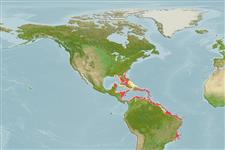
Rifbewoner; diepte 0 - 53 m (Ref. 101593). Tropical; 33°N - 34°S, 91°W - 32°W
Western Atlantic: Yucatan, Mexico, Caribbean Sea to Bermuda and Florida, south to Rio Grande do Sul, Brazil and Fernando de Noronha Archipelago.
Lengte bij maturiteit / Grootte / Gewicht / Leeftijd
Maturiteit: Lm ? range ? - ? cm Max length : 31.0 cm TL mannelijk / geslacht onbekend; (Ref. 271); common length : 20.0 cm TL mannelijk / geslacht onbekend; (Ref. 4)
West Central Atlantic; Southwest Atlantic: Western Atlantic; Bermuda and Florida to E. Brazil, including Yucatan and the Caribbean Sea. 31 cm, maximum total body length; 20 cm, common length. Occurs in coastal waters down to 50 m with rock or coral substrate (Ref. 4). Minimum depth range from Ref. 122059. Inhabits coastal waters with rock or coral substrates (Ref. 4). On rubble (Ref. 97531). Requires calcareous substrate with algae and gravel (Ref. 81730). Scarce and generally found in reef habitats (Ref. 104228). Coexists with Panulirus argus (Ref. 102863) but little competition is likely to occur between the two (Ref. 104228). In general, palinurids are mainly considered carnivores, usually feeding upon sluggish, easily captured animals where most material is eaten alive or freshly killed (Ref. 105260).
Levenscyclus en paargedrag
Maturiteit | Voortplanting | Paaien | Eieren | Fecunditeit | Larven
Members of the order Decapoda are mostly gonochoric. Mating behavior: Precopulatory courtship ritual is common (through olfactory and tactile cues); usually indirect sperm transfer.
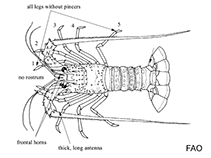
Holthuis, L.B. 1991 FAO Species Catalogue. Vol. 13. Marine lobsters of the world. An annotated and illustrated catalogue of species of interest to fisheries known to date. FAO Fish. Synop. 125(13):292p. Rome: FAO. (Ref. 4)
Status op de Rode Lijst van het IUCN
(Ref. 130435: Version 2025-2 (Global))
CITES status (Ref. 108899)
Not Evaluated
Not Evaluated
Gevaar voor de mens
Gebruik door de mens
Visserij: commercieel
FAO - Publication: search | FishSource |
Tools
Meer informatie
Trofische ecologieVoedsel (prooien)
Dieetsamenstelling
Voedselconsumptie
Predatoren
PopulatiedynamicaGroeiMax. leeftijden / matenLengte-gewicht rel.Lengte-lengte rel.LengtefrequentiesMassaconversieAbundantie LevenscyclusVoortplantingMaturiteitFecunditeitPaaienEierenOntwikkeling van de eierenLarven FysiologieZuurstofverbruik
Menselijk gerelateerdPostzegels, munten, diversen.
Internetbronnen
Schattingen op basis van modellen
Kwetsbaarheid van de visserij
(Ref. 71543) |
Low vulnerability (21 of 100). |
Prijsklasse
(Ref. 80766): |
Very high. |