Malacostraca |
Decapoda |
Palinuridae
Milieu: milieu / Klimaatzone / Diepte / verspreidingsgebied
Ecologie
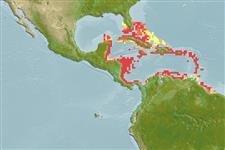
Rifbewoner; diepte 0 - 23 m (Ref. 83922). Tropical; 28°N - 6°N, 89°W - 55°W (Ref. 4)
Western Atlantic: Caribbean Arc from Cuba to Trinidad, Los Roques.
Lengte bij maturiteit / Grootte / Gewicht / Leeftijd
Maturiteit: Lm ? range ? - ? cm Max length : 20.0 cm TL mannelijk / geslacht onbekend; (Ref. 271); common length : 15.0 cm TL mannelijk / geslacht onbekend; (Ref. 4)
It has lengths of 20 cm, maximum total body length; 15 cm, common length (Ref. 4). Maximum depth range from Ref. 122059. Exclusively inhabits coral reefs (Ref. 106828). Also occurs in shallow waters and inhabits rocky areas, mainly in crevices (Ref. 4), seagrasses and rubble (Ref. 97531). Nocturnal omnivore (Ref. 106982).
Levenscyclus en paargedrag
Maturiteit | Voortplanting | Paaien | Eieren | Fecunditeit | Larven
Members of the order Decapoda are mostly gonochoric. Mating behavior: Precopulatory courtship ritual is common (through olfactory and tactile cues); usually indirect sperm transfer.
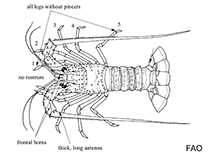
Holthuis, L.B. 1991 FAO Species Catalogue. Vol. 13. Marine lobsters of the world. An annotated and illustrated catalogue of species of interest to fisheries known to date. FAO Fish. Synop. 125(13):292p. Rome: FAO. (Ref. 4)
Status op de Rode Lijst van het IUCN
(Ref. 130435: Version 2025-2 (Global))
CITES status (Ref. 108899)
Not Evaluated
Not Evaluated
Gevaar voor de mens
Gebruik door de mens
Visserij: commercieel
FAO - Publication: search | FishSource |
Tools
Meer informatie
PopulatiedynamicaGroeiMax. leeftijden / matenLengte-gewicht rel.Lengte-lengte rel.LengtefrequentiesMassaconversieAbundantie LevenscyclusVoortplantingMaturiteitFecunditeitPaaienEierenOntwikkeling van de eierenLarven FysiologieZuurstofverbruik
Menselijk gerelateerdPostzegels, munten, diversen.
Internetbronnen
Schattingen op basis van modellen
Kwetsbaarheid van de visserij
(Ref. 71543) |
Low vulnerability (10 of 100). |
Prijsklasse
(Ref. 80766): |
Very high. |