Malacostraca |
Decapoda |
Stenopodidae
ສະພາບແວດລ້ອມ: ສະພາບແວດລ້ອມ / ເຂດດິນຟ້າອາກາດ / ລະດັບຄວາມເລິກ / ຂອບເຂດການແຈກຢາຍ
ນິເວດວິທະຍາ
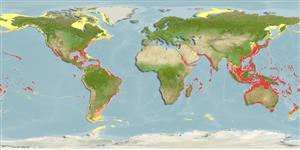
Benthic; ລະດັບຄວາມເລິກ 1 - 200 m (ເອກະສານອ້າງອີງ 96667). Tropical; 43°N - 42°S, 180°W - 180°E
Indo-Pacific and Western Atlantic: From the Red Sea and South Africa to Tuamotu Is., Hawaii and Easter Is. In the Atlantic: North Carolina and Bermuda to the Caribbean Sea and south to São Paulo, Brazil. Tropical and subtropical.
ຄວາມຍາວໃນການເຕີບໂຕເຕັມຄັ້ງທໍາອິດ / ຂະໜາດ / ນ້ຳໜັກ / ອາຍຸ
ການຈະເລີນເຕັມໄວ: Lm ? range ? - ? cm
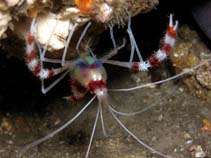
The carapace, abdomen, and claws are covered with tiny spines. Red and white bands are also present on the body and claws, with the bands sometimes bordered in purple. Two pairs of long, white antennae also present.
Maximum depth from Ref. 97531. Subtidal (Ref. 106854). Found on rocky bottoms and coral reefs (Ref. 83922). Also occur at natural depressions in rock formations (Ref. 126252). General carnivore (Ref. 116259). Feed mainly on small arthropods and other marine invertebrates. Considered as a cleaner shrimp, removing and consuming parasites, injured tissue, and leftover food particles from other reef fishes (Ref. 125532). Dwells in deep crevices and reef overhangs (Ref. 129713).
ວົງຈອນຊີວິດ ແລະພຶດຕິກໍາການຫາຄູ່
ການຈະເລີນເຕັມໄວ | ການສືບພັນ | ການວາງໄຂ່ | ໄຂ່ | ຄວາມດົກຂອງໄຂ່ປາ | ຕົວອ່ອນ
Members of the order Decapoda are mostly gonochoric (Ref. 833). Mating behavior occurs in the following sequence: antennule contact, erection of female body, grasping, mating and spawning (Ref. 107136).
Williams, A.B., L.G. Abele, D.L. Felder, H.H. Hobbs Jr., R.B. Manning, P.A. McLaughlin and I. Pérez Farfante 1988 Common and scientific names of aquatic invertebrates from the United States and Canada: decapod crustaceans. American Fisheries Society Special Publication 17. 77 pp. + 12 figs. (ເອກະສານອ້າງອີງ 2214)
ສະຖານະພາບບັນຊີແດງຂອງ IUCN
(ເອກະສານອ້າງອີງ 130435: Version 2025-2 (Global))
ສະຖານະ CITES (ເອກະສານອ້າງອີງ 108899)
Not Evaluated
CMS (ເອກະສານອ້າງອີງ 116361)
Not Evaluated
ໄພຂົ່ມຂູ່ຕໍ່ມະນຸດ
ການນໍາໃຊ້ຂອງມະນຸດ
ການປະມົງ: ເປັນສີນຄ້າ
FAO - Publication: search | FishSource |
ເຄື່ອງມື
ຂໍ້ມູນຕື່ມອີກ
ນິເວດວິທະຍາເຂດຮ້ອນລາຍການອາຫານ (ຜູ້ຖືກລ້າ)ອົງປະກອບຂອງອາຫານການບໍລິໂພກອາຫານຜູ້ລ້າ ນະໂຍບາຍດ້ານປະຊາກອນການເຕີບໃຫຍ່
ສູງສຸດ. ອາຍຸ / ຂະຫນາດ
ຄວາມຍາວ-ນ້ໍາຫນັກ rel.
ຄວາມຍາວ - ຄວາມຍາວ rel.
ຄວາມຖີ່ຄວາມຍາວ
ການແປງມະຫາຊົນ
ຄວາມອຸດົມສົມບູນ
ຟີຊິກສາດການບໍລິໂພກອົກຊີເຈນ
ມະນຸດທີ່ກ່ຽວຂ້ອງສະແຕມ, ຫຼຽນ, ອື່ນໆ.
ແຫຼ່ງອີນເຕີເນັດ
ການຄາດຄະເນໂດຍອີງໃສ່ແບບຈໍາລອງ
ຄວາມສ່ຽງຕໍ່ການຫາປາ
(ເອກະສານອ້າງອີງ 71543) |
(0 of 100). |
ປະເພດລາຄາ
(ເອກະສານອ້າງອີງ 80766): |
Unknown. |