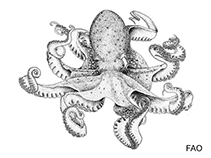
Cephalopoda |
Octopoda |
Octopodidae
पर्यावरण: पर्यावरण / जलवायु क्षेत्र / गहराई सीमा / वितरण सीमा
पारिस्थितिकी
Benthic. Temperate
Northeast Pacific and the Arctic: Bering Sea. Temperate to polar.
प्रथम परिपक्वता पर लंबाई / आकार / वज़न / आयु
परिपक्व अवधि: Lm ? range ? - ? cm
जीवन चक्र और संभोग व्यवहार
परिपक्व अवधि | पुनरुत्पत्ति | मछलीऔ का अंडे देना | अंडे | उपजाऊपन | लार्वा
Members of the class Cephalopoda are gonochoric. Male and female adults usually die shortly after spawning and brooding, respectively. Mating behavior: Males perform various displays to attract potential females for copulation. During copulation, male grasp the female and inserts the hectocotylus into the female's mantle cavity where fertilization usually occurs. Life cycle: Embryos hatch into planktonic stage and live for some time before they grow larger and take up a benthic existence as adults.
Jorgensen, E.M., J.M. Strugnell and A.L. Allcock 2010 Description and phylogenetic relationships of a new genus of octopus, Sasakiopus (Cephalopoda: Octopodidae), from the Bering Sea, with a redescription of Sasakiopus salebrosus (Sasaki, 1920). Journal of Molluscan Studies 76:57-66. (संदर्भ 84310)
आईयूसीएन रेड लिस्ट स्थिति
(संदर्भ 130435: Version 2025-2 (Global))
CITES स्थिति (संदर्भ 108899)
Not Evaluated
CMS (संदर्भ 116361)
Not Evaluated
मनुष्यों के लिए ख़तरा
Harmless
मानव उपयोग
FAO - Publication: search | FishSource |
साधन
अधिक जानकारी
ट्रॉफिक पारिस्थितिकीखाद्य पदार्थ (शिकार)
संघटक आहार
आहार खपत
परभक्षी
जनसंख्या गतिशीलताबाढ़
अधिकतम आयु/आकार
लंबाई-वजन संबंध
लंबाई-लंबाई संबंध
लंबाई-आवृत्तियाँ
सामूहिक रूपांतरण
बहुतायत
जीवन चक्रपुनरुत्पत्तिपरिपक्व अवधिउपजाऊपनमछलीऔ का अंडे देनाअंडेअंडे का विकासलार्वा फिजियोलॉजीप्राणवायु की खपत
मानव संबंधीटिकट, सिक्के, विविध.
इंटरनेट स्रोत
मॉडल पर आधारित अनुमान
मछली पकड़ने की भेद्यता
(संदर्भ 71543) |
(0 of 100). |