Bivalvia |
Venerida |
Veneridae
Environment: milieu / climate zone / depth range / distribution range
Ecology
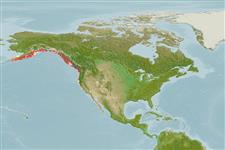
Benthic; depth range 0 - 50 m (Ref. 356). Temperate, preferred 5°C (Ref. 107945); 61°N - 37°N, 165°W - 122°W
Eastern Pacific: from southeast Bering Sea and Prince William Sound, Alaska south to Monterey, California, USA.
Length at first maturity / Size / Weight / Age
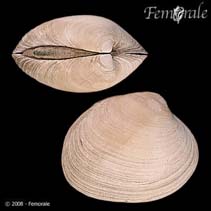
Maturity: Lm ? range ? - ? cm Max length : 13.0 cm SHL male/unsexed; (Ref. 95344); max. reported age: 26 years (Ref. 122788)
Reported to be toxic in Alaskan communities, due to neurotoxins (saxitoxins, STXs) from ingested microalgae Alexandrium. Removal of all or part of the siphon is being practiced to reduce clam toxicity (Ref. 138447). Buries in substrate to depths of 30 cm along mid- to lower intertidal areas (Ref. 95344).
Life cycle and mating behavior
Maturity | Reproduction | Spawning | Eggs | Fecundity | Larvae
Members of the class Bivalvia are mostly gonochoric, some are protandric hermaphrodites. Life cycle: Embryos develop into free-swimming trocophore larvae, succeeded by the bivalve veliger, resembling a miniature clam.
Lamb, A., D. Gibbs and C. Gibbs 2011 Strait of Georgia biodiversity in relation to bull kelp abundance. Pacific Fisheries Resource Conservation Council, 111p. (Ref. 93817)
IUCN Red List Status
(Ref. 130435: Version 2025-2 (Global))
CITES status (Ref. 108899)
Not Evaluated
Not Evaluated
Threat to humans
Poisonous to eat (Ref. 138447)
Human uses
Fisheries: commercial
FAO - Publication: search | FishSource | Sea Around Us
Tools
More information
Trophic EcologyFood items (preys)Diet compositionFood consumptionPredators Life cycleReproductionMaturityFecunditySpawningEggsEgg developmentLarvae PhysiologyOxygen consumption
Human RelatedStamps, coins, misc.
Internet sources
Estimates based on models
Fishing Vulnerability
(Ref. 71543) |
Moderate vulnerability (43 of 100). |
Climate Vulnerability
(Ref. 125649) |
High to very high vulnerability (73 of 100) |
Price category
(Ref. 80766): |
Low. |
Nutrients
|
Calcium = 149 [71, 228] mg/100g; Iron = 8.53 [1.95, 15.11] mg/100g; Protein = 9.88 [8.64, 11.12] %; Omega3 = 0.313 [0.202, 0.423] g/100g; Selenium = 61 [50, 72] μg/100g; VitaminA = 0 μg/100g; Zinc = 2.04 [0.56, 3.51] mg/100g (wet weight); based on nutrient studies. |