Malacostraca |
Decapoda |
Palaemonidae
محیط زیست: محیط زیست / منطقه آب و هوایی / تغييرات عمق / محدوده توزیع
بوم شناسي
Benthic; لب شور; pH range: 0.0 - 55.0; تغييرات عمق 0 - 2 m (مرجع 97531). Subtropical; 5°C - 38°C (مرجع 82139)
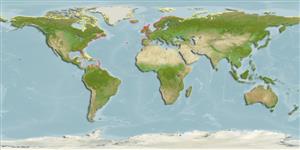
Western Atlantic and the Arctic.
طول در اولین بلوغ / اندازه / وزن / سن
بلوغ: Lm ? range ? - ? cm Max length : 4.5 cm TL جنس نر / بدون خواص جنسي; (مرجع 82138); 4.65 cm TL (female); بيشينه سن گزارش شده: 1.50 سال ها (مرجع 2823)
Often found near underwater structures and dense stands of aquatic macrophytes in shallow areas of estuaries. Movement and distributional patterns likely influenced by both photoperiod and tidal cycles. Mainly detritivorous; also feeds on epiphytic microalgae and prey on meiofauna and small infaunal polychaetes, oligochaetes, nematodes, epiphytic fauna, and mysids. Preyed upon by various estuarine fishes and other aquatic carnivores. Host to numerous species of parasites and ectocommensals, primarily coccidia, microsporidians, trematodes, isopods, and leeches (Ref. 96311).
چرخه زندگی و رفتار جفتگیری
بلوغ | تولید مثل | تخم ریزی | تخم ها | باروری | توزاد ( لارو)
During the spawning season, the female molts and becomes receptive to the male. Copulation occurs within 7 hours after molting. Ova are externally fertilized on the ventral surface of the female abdomen. Fecundity is between 247 to 486 eggs per female. Eggs hatch 12 to 60 days after fertilization. After spawning, the female molts again. Larvae are planktonic and feed on zooplankton, algae, and detritus.
مآخذ اصلی
مراجع | هماهنگ كننده | همكاران
Williams, A.B., L.G. Abele, D.L. Felder, H.H. Hobbs Jr., R.B. Manning, P.A. McLaughlin and I. Pérez Farfante 1988 Common and scientific names of aquatic invertebrates from the United States and Canada: decapod crustaceans. American Fisheries Society Special Publication 17. 77 pp. + 12 figs. (مرجع 2214)
وضعيت در فهرست قرمز IUCN
(مرجع 130435: Version 2025-2 (Global))
وضعيت از نظر سايتس (مرجع 108899)
Not Evaluated
Not Evaluated
خطر برای انسان ها
استفاده انسانی
FAO - Publication: search | FishSource |
ابزارها
اطلاعات بيشتر
مرتبط با انسانتمبر، سکه، متفرقه.
منابع اينترنتي
تخمینها بر اساس مدلها
جهندگی
(Ref. 69278): |
زياد, كمينه زمان لازم براي دو برابر شدن جمعيت ، كمتر از 15 ماه (K=0.43-0.48; tmax=1.5) |
آسیبپذیری ماهیگیری
(مرجع 71543) |
Low vulnerability (23 of 100). |
طبقه قيمت
(مرجع 80766): |
Very high. |