Mammalia |
Sirenia |
Trichechidae
สิ่งแวดล้อม : สิ่งแวดล้อม / เขตภูมิอากาศ / ระดับความลึก / ระยะการกระจายสินค้า
นิเวศวิทยา
สัตว์น้ำหน้าดิน; น้ำจืด; กร่อย; ระดับความลึก 0 - 13 m (อ้างอิง 116169), usually 2 - 5 m (อ้างอิง 81178). Tropical; 38°N - 21°S, 89°W - 35°W
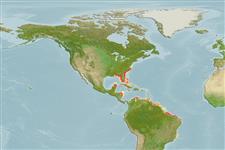
Western Atlantic: Trichechus manatus manatus: from the coasts and rivers of Mexico to as far south to Rio Doce, Brazil including the Orinoco and Amazon; Trichechus manatus latirostris: from the Florida Peninsula to Rhode Island. Tropical to temperate.
ความยาวเมื่อครบกำหนดครั้งแรก / ขนาด / น้ำหนัก / อายุ
วัยเจริญพันธุ์: Lm ? range ? - ? cm Max length : 390 cm TL เพศผู้/กระเทย; (อ้างอิง 1394); น้ำหนักสูงสุดที่มีการรายงาน: 1.6 t (อ้างอิง 1394)
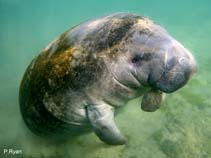
Found in coastal marine, brackish and freshwater areas. Feeds on aquatic plants, (i.e. water hyacinths and marine seagrasses, algae, parts of mangrove trees, floating and shoreline vegetation); invertebrates (i.e. tunicates); and fish they remove from fishing nets (Ref. 1394). Found in coastal marine, brackish and freshwater areas (Ref. 1394), where primary habitat consists of rivers, coastal lagoons and bays and mangrove islands (Ref. 86755). Feeds on aquatic plants, (i.e. water hyacinths and marine seagrasses, algae, parts of mangrove trees, floating and shoreline vegetation); invertebrates (i.e. tunicates); and fish they remove from fishing nets (Ref. 1394).
วงจรชีวิตและพฤติกรรมการผสมพันธุ์
วัยเจริญพันธุ์ | การสืบพันธุ์ | การวางไข่ | เซลสืบพันธ์ของเพศเมีย(ไข่) | ความดกของไข่ | ตัวอ่อน
Jefferson, T.A., S. Leatherwood and M.A. Webber 1993 FAO species Identification Guide: Marine Mammals of the World. Rome, FAO. 320 p. + 587 figures. (อ้างอิง 1394)
สถานะบัญชีแดงของ IUCN
(อ้างอิง 130435: Version 2025-2 (Global))
สถานะไซเตส (อ้างอิง 108899)
CMS (อ้างอิง 116361)
ภัยคุกคามต่อมนุษย์
การใช้ของมนุษย์
การประมง: การค้า
FAO - การประมง: โปรไฟล์สายพันธุ์; Publication: search | FishSource | ทะเลรอบๆเรา
เครื่องมือ
ข้อมูลเพิ่มเติม
พลวัตของประชากรการเจริญเติบโต
อายุสูงสุด / ขนาด
ความยาว-น้ำหนักสัมพันธ์
ความยาว-ความยาวสัมพันธ์
ความยาว-ความถี่
การแปลงมวล
อุดมสมบรูณ์
วงจรชีวิตการสืบพันธุ์วัยเจริญพันธุ์ความดกของไข่การวางไข่เซลสืบพันธ์ของเพศเมีย(ไข่)การพัฒนาไข่ตัวอ่อน เกี่ยวข้องกับมนุษย์แสตมป์ เหรียญ อื่นๆ
แหล่งที่มาจากอินเตอร์เน็ต
การประมาณค่าตามแบบจำลอง
ความเสี่ยงต่อการตกปลา
(อ้างอิง 71543) |
Very high vulnerability (90 of 100). |
หมวดหมู่ราคา
(อ้างอิง 80766): |
Unknown. |