Mammalia |
Carnivora |
Otariidae
Environment: milieu / climate zone / depth range / distribution range
Ecology
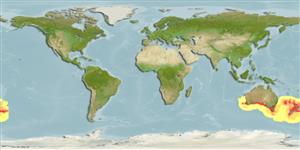
Bathydemersal. Temperate; 90°N - 90°S, 100°E - 170°E
Indo-West Pacific. Temperate to tropical climates.
Length at first maturity / Size / Weight / Age
Maturity: Lm ? range ? - ? cm Max length : 200 cm TL male/unsexed; (Ref. 1394); 150 cm TL (female); max. published weight: 200.0 kg (Ref. 1394); max. published weight: 200.0 kg
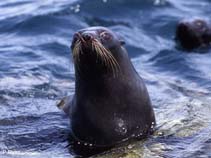
Known from locations more exposed to wind and weather such as rocky areas; prefer waters of the continental shelf and slope. Feeds on a wide variety of pelagic near-surface fishes and squids, and benthic prey, particularly octopuses; and occasionally feeds on penguins and other marine birds. Found in locations more exposed to wind and weather; prefer waters of the continental shelf and slope. Feeds on a wide variety of pelagic near-surface fishes and squids, and benthic prey, particularly octopuses; occasionally feeds on penguins and other marine birds (Ref. 1394).
Life cycle and mating behavior
Maturity | Reproduction | Spawning | Eggs | Fecundity | Larvae
Jefferson, T.A., S. Leatherwood and M.A. Webber 1993 FAO species Identification Guide: Marine Mammals of the World. Rome, FAO. 320 p. + 587 figures. (Ref. 1394)
IUCN Red List Status
(Ref. 130435: Version 2025-2 (Global))
CITES status (Ref. 108899)
Not Evaluated
Threat to humans
Human uses
Fisheries: commercial
FAO - Fisheries: species profile; Publication: search | FishSource | Sea Around Us
Tools
More information
Life cycleReproductionMaturityFecunditySpawningEggsEgg developmentLarvae PhysiologyOxygen consumption
Human RelatedStamps, coins, misc.
Internet sources
Estimates based on models
Resilience
(Ref. 69278): |
Medium, minimum population doubling time 1.4 - 4.4 years (K=0.17-0.41) |
Fishing Vulnerability
(Ref. 71543) |
High to very high vulnerability (71 of 100). |
Price category
(Ref. 80766): |
Unknown. |