Bivalvia |
Nuculida |
Veneridae
محیط زیست: محیط زیست / منطقه آب و هوایی / تغييرات عمق / محدوده توزیع
بوم شناسي
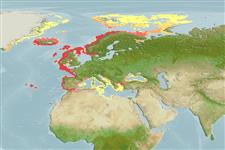
Benthic; لب شور; تغييرات عمق 125 - 200 m (مرجع 2754). Temperate; 72°N - 36°S, 18°W - 42°E
Eastern Atlantic and the Mediterranean. Subtropical to Temperate.
طول در اولین بلوغ / اندازه / وزن / سن
بلوغ: Lm ? range ? - ? cm
Inhabits mainly muddy detritic areas (Refs. 2780, 96352). May also be found in sandbanks (Ref. 96352). A surface deposit-feeder (Ref. 96292). A microvore that feeds on organic detritus (Ref. 96352).
چرخه زندگی و رفتار جفتگیری
بلوغ | تولید مثل | تخم ریزی | تخم ها | باروری | توزاد ( لارو)
Members of the class Bivalvia are mostly gonochoric, some are protandric hermaphrodites. Life cycle: Embryos develop into free-swimming trocophore larvae, succeeded by the bivalve veliger, resembling a miniature clam.
مآخذ اصلی
مراجع | هماهنگ كننده | همكاران
Demir, M. 2003 Shells of mollusca collected from the seas of Turkey. Turkey Journal of Zoology 27:101-140. (مرجع 2754)
وضعيت در فهرست قرمز IUCN
(مرجع 130435: Version 2025-2 (Global))
وضعيت از نظر سايتس (مرجع 108899)
Not Evaluated
Not Evaluated
خطر برای انسان ها
استفاده انسانی
FAO - Publication: search | FishSource |
ابزارها
اطلاعات بيشتر
پویایی جمعیترشد
حداکثر سن/اندازه
نسبت طول-وزن.
طول-طول نسبی.
نوسانات طولی
تبدیل انبوه
فراواني
چرخه زندگیتولید مثلبلوغباروریتخم ریزیتخم هانمو تخمتوزاد ( لارو) مرتبط با انسانتمبر، سکه، متفرقه.
منابع اينترنتي
تخمینها بر اساس مدلها
آسیبپذیری ماهیگیری
(مرجع 71543) |
(0 of 100). |
طبقه قيمت
(مرجع 80766): |
Unknown. |