Malacostraca |
Decapoda |
Carpiliidae
محیط زیست: محیط زیست / منطقه آب و هوایی / تغييرات عمق / محدوده توزیع
بوم شناسي
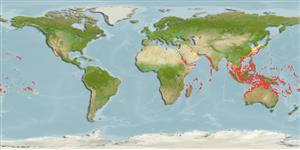
وابسته به آب سنگ; تغييرات عمق 0 - 95 m (مرجع 96667). Tropical; 37°N - 32°S, 30°E - 108°W
Indo-Pacific: from Japan, Hawaii and the Red Sea south to South Africa and Mozambique, west to Eastern Africa and east to French Polynesia and Easter Island.
طول در اولین بلوغ / اندازه / وزن / سن
بلوغ: Lm ? range ? - ? cm Max length : 15.0 cm CW جنس نر / بدون خواص جنسي; (مرجع 343)
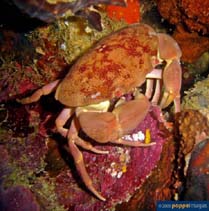
Carapace ovate; dorsal surface very smooth and convex. Color: uniform red to reddish brown, with irregular dark brown patches on the dorsal surface of carapace (Ref. 343). Pincers are stout and unequal in size (Ref. 128968).
Found under stones or cracks in coral reefs (Ref. 128968). Collected extensively for food in some areas (Ref. 343). May contain toxins that are undectectable in tests (Ref. 107779), and thus, may not be safe to eat (Ref. 128968). Found in the littoral to sublittoral zones (Ref. 77016). On rocky outcrops or coral reefs sheltering in crevices or under stones (Refs. 801, 9773). Reported to be mildly toxic (Ref. 103037). Benthic carnivore (Ref. 107079). Preys on tridacnids (Ref. 108392). Opportunistic scavenger. Feeds on plant material to benthic invertebrates (Ref. 9773).
چرخه زندگی و رفتار جفتگیری
بلوغ | تولید مثل | تخم ریزی | تخم ها | باروری | توزاد ( لارو)
Members of the order Decapoda are mostly gonochoric. Mating behavior: Precopulatory courtship ritual is common (through olfactory and tactile cues); usually indirect sperm transfer.
مآخذ اصلی
مراجع | هماهنگ كننده | همكاران
Ng, P.K.L. 1998 Crabs. p. 1045-1155. In K.E. Carpenter and V.H. Niem (eds) FAO species identification guide for fishery purposes. The living marine resources of the Western Central Pacific. Volume 2. Cephalopods, crustaceans, holothurians and sharks. Rome, FAO. 1998. pp. 687-1396. (مرجع 343)
وضعيت در فهرست قرمز IUCN
(مرجع 130435: Version 2025-2 (Global))
وضعيت از نظر سايتس (مرجع 108899)
Not Evaluated
Not Evaluated
خطر برای انسان ها
Poisonous to eat (مرجع 128968)
استفاده انسانی
ماهي گيري – شيلات: تجاري
FAO - Publication: search | FishSource | دریای اطراف ما
ابزارها
اطلاعات بيشتر
پویایی جمعیترشد
حداکثر سن/اندازه
نسبت طول-وزن.
طول-طول نسبی.
نوسانات طولی
تبدیل انبوه
فراواني
چرخه زندگیتولید مثلبلوغباروریتخم ریزیتخم هانمو تخمتوزاد ( لارو) مرتبط با انسانتمبر، سکه، متفرقه.
منابع اينترنتي
تخمینها بر اساس مدلها
آسیبپذیری ماهیگیری
(مرجع 71543) |
Low vulnerability (10 of 100). |
طبقه قيمت
(مرجع 80766): |
Unknown. |
Nutrients
|
Calcium = 109 [35, 184] mg/100g; Iron = 1.59 [1.21, 1.97] mg/100g; Protein = 20.2 [19.2, 21.3] %; Omega3 = 0.285 [0.185, 0.386] g/100g; Selenium = 48.3 [-31.7, 128.3] μg/100g; VitaminA = 0 μg/100g; Zinc = 1.79 [1.17, 2.40] mg/100g (wet weight); based on nutrient studies. |