Malacostraca |
Decapoda |
Nephropidae
Environment: milieu / climate zone / depth range / distribution range
Ecology
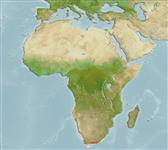
Benthic; depth range 20 - 40 m (Ref. 122059). Subtropical; 34°S - 33°S, 18°E - 27°E (Ref. 4)
Eastern Atlantic: South Africa and UK.
Length at first maturity / Size / Weight / Age
Maturity: Lm ? range ? - ? cm Max length : 12.9 cm TL male/unsexed; (Ref. 122061); 9 cm TL (female); common length : 10.0 cm TL male/unsexed; (Ref. 4)
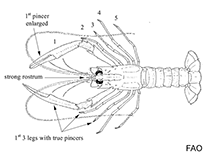
It has a total body length of 8 to 10 cm; and a carapace length of 4 to 5 cm (Ref. 4). Occurs at shallow coastal waters, rock pools (Ref. 4).
Life cycle and mating behavior
Maturity | Reproduction | Spawning | Eggs | Fecundity | Larvae
Members of the order Decapoda are mostly gonochoric. Mating behavior: Precopulatory courtship ritual is common (through olfactory and tactile cues); usually indirect sperm transfer.
Holthuis, L.B. 1991 FAO Species Catalogue. Vol. 13. Marine lobsters of the world. An annotated and illustrated catalogue of species of interest to fisheries known to date. FAO Fish. Synop. 125(13):292p. Rome: FAO. (Ref. 4)
IUCN Red List Status
(Ref. 130435: Version 2025-2 (Global))
CITES status (Ref. 108899)
Not Evaluated
Not Evaluated
Threat to humans
Human uses
Fisheries: of no interest
FAO - Publication: search | FishSource |
Tools
More information
Trophic EcologyFood items (preys)
Diet composition
Food consumption
Predators
Population dynamicsGrowthMax. ages / sizesLength-weight rel.Length-length rel.Length-frequenciesMass conversionAbundance Life cycleReproductionMaturityFecunditySpawningEggsEgg developmentLarvae PhysiologyOxygen consumption
Human RelatedStamps, coins, misc.
Internet sources
Estimates based on models
Fishing Vulnerability
(Ref. 71543) |
Low vulnerability (10 of 100). |
Price category
(Ref. 80766): |
Unknown. |