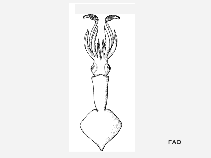
Cephalopoda |
Oegopsida |
Brachioteuthidae
Ambiente: milieu / zona climática / intervalo de profundidade / gama de distribuição
Ecologia
Pelagic-oceanic; intervalo de profundidade 500 - 1000 m (Ref. 275). Polar; 29°S - 74°S, 167°E - 16°E (Ref. 275)
Atlantic, Indo-Pacific and the Antarctic.
Comprimento na primeira maturidade / Tamanho / Peso / Idade
Maturidade: Lm ? range ? - ? cm Max length : 9.0 cm ML macho/indeterminado; (Ref. 275)
Oceanic; occurring in equatorial, southern subtropical, southern peripheral water masses. Paralarvae are epipelagic and mesopelagic; adults are lower epipelagic, mesopelagic and bathypelagic. Predators include the dwarf sperm whale, Kogia sima, off Brazil, pygmy sperm whale, K. breviceps, off New Zealand, the southern elephant seal, Miroungia leonina, and fishes, such as hakes and macrurids. A principal prey item seems to be krill (Ref. 97142).
Ciclo de vida e comportamento de acasalamento
Maturidade | Reprodução | Desova | Ovos | Fecundidade | Larvas
Members of the class Cephalopoda are gonochoric. Male and female adults usually die shortly after spawning and brooding, respectively. Mating behavior: Males perform various displays to attract potential females for copulation. During copulation, male grasp the female and inserts the hectocotylus into the female's mantle cavity where fertilization usually occurs. Life cycle: Embryos hatch into planktonic stage and live for some time before they grow larger and take up a benthic existence as adults.
Roper, C.F.E., M.J. Sweeney and C.E. Nauen 1984 FAO Species Catalogue. Vol. 3. Cephalopods of the world. An annotated and illustrated catalogue of species of interest to fisheries. FAO Fish. Synop. 125(3):277p. Rome: FAO. (Ref. 275)
Categoria na Lista Vermelha da IUCN
(Ref. 130435: Version 2025-2 (Global))
Categoria CITES (Ref. 108899)
Not Evaluated
Not Evaluated
Ameaça para o homem
Utilização humana
FAO - Publication: search | FishSource |
Ferramentas
Mais informação
Dinâmica das populaçõesCrescimentoIdades / tamanhos máximosComprimento-peso rel.Comprimento-comprimento rel.Frequência de comprimentoConversão de massaAbundância Ciclo de vidaReproduçãoMaturidadeFecundidadeDesovaOvosDesenvolvimento dos ovosLarvas FisiologiaConsumo de oxigénio
Relacionado com o ser humanoSelos, moedas, diversos.
Fontes da internet
Estimativas baseadas em modelos
Vulnerabilidade da pesca
(Ref. 71543) |
Low vulnerability (10 of 100). |
Categoria de preço
(Ref. 80766): |
Medium. |