Bivalvia |
Cardiida |
Cardiidae
Environment: milieu / climate zone / depth range / distribution range
Ecology
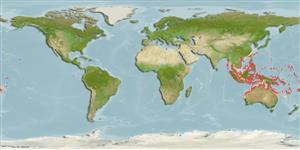
Reef-associated; depth range 0 - 30 m (Ref. 348). Tropical; 23°C - 30°C (Ref. 102835); 29°N - 28°S, 91°E - 170°W
Indo-West Pacific.
Length at first maturity / Size / Weight / Age
Maturity: Lm ?, range 13 - 15 cm Max length : 50.0 cm SHL male/unsexed; (Ref. 117184); common length : 20.0 cm SHL male/unsexed; (Ref. 348)
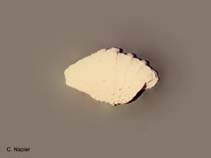
The valves are thick, heavy and triangular in shape, often covered with reddish spots and obscured by encrustations. The mantle is a deep yellowgreen, irregularly mottled at the periphery and in the center.
Collected for food and shell, the latter commonly used in the shellcraft industry (Ref. 348). Maximum depth from Ref. 75831. In relatively shallow water, in lagoon, barrier and fringing reefs (Ref. 106851). Found in intertidal areas on corals (Ref. 75831). Tridacnids derive their nutrition from uptake of dissolved matter through their epidermis and from their symbiotic zooxanthella Symbiodinium microadriaticum (Ref. 107098).
Life cycle and mating behavior
Maturity | Reproduction | Spawning | Eggs | Fecundity | Larvae
Broadcast spawners. Life cycle: Embryos develop into free-swimming trocophore larvae, succeeded by the bivalve veliger, resembling a miniature clam (Ref. 833).
Poutiers, J.M. 1998 Bivalves. Acephala, Lamellibranchia, Pelecypoda. p. 123-362. In Carpenter, K. E. and V. H. Niem. 1998. FAO species identification guide for fishery purposes. The living marine resources of the Western Central Pacific. Volume 1. Seaweeds, corals, bivalves, and gastropods. Rome, FAO. (Ref. 348)
IUCN Red List Status
(Ref. 130435: Version 2025-2 (Global))
CITES status (Ref. 108899)
Not Evaluated
Threat to humans
Harmless
Human uses
Fisheries: commercial; aquaculture: commercial
FAO - Publication: search | FishSource | Sea Around Us
Tools
More information
Population dynamicsGrowthMax. ages / sizesLength-weight rel.Length-length rel.Length-frequenciesMass conversionAbundance PhysiologyOxygen consumption
Human RelatedStamps, coins, misc.
Internet sources
Estimates based on models
Resilience
(Ref. 69278): |
Low, minimum population doubling time 4.5 - 14 years (K=0.12-0.2; tm=4) |
Fishing Vulnerability
(Ref. 71543) |
Moderate to high vulnerability (53 of 100). |
Price category
(Ref. 80766): |
Unknown. |
Nutrients
|
Calcium = 149 [71, 228] mg/100g; Iron = 8.53 [1.95, 15.11] mg/100g; Protein = 9.88 [8.64, 11.12] %; Omega3 = 0.313 [0.202, 0.423] g/100g; Selenium = 61 [50, 72] μg/100g; VitaminA = 0 μg/100g; Zinc = 2.04 [0.56, 3.51] mg/100g (wet weight); based on nutrient studies. |