Demospongiae |
Dictyoceratida |
Thorectidae
Milieu: milieu / Klimaatzone / Diepte / verspreidingsgebied
Ecologie
Sessile; brak water. Tropical
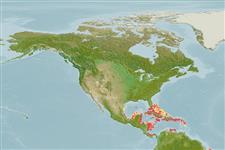
Western Central Atlantic: Caribbean.
Lengte bij maturiteit / Grootte / Gewicht / Leeftijd
Maturiteit: Lm ? range ? - ? cm
Massive, often forming groups of adjacent oscular mounds or volcanos. Color varies from brown skin-yellow oscules and flesh; to light greenish skin-yellow green oscules and flesh. Dermis resting on fibers is honeycomb patterned. Darkens and exudes mucus when handled.
Found in mangroves (Ref. 86836).
Levenscyclus en paargedrag
Maturiteit | Voortplanting | Paaien | Eieren | Fecunditeit | Larven
Members of the class Demospongiae are hermaphroditic. Life cycle: The zygote develops into parenchymella larva (free-swimming) before settling down on a substrate where it grows into a young sponge.
Diaz, M.C. and K. Ruetzler 2009 Biodiversity and abundance of sponges in Caribbean mangrove: Indicators of environmental quality. pp. 151-172, In Lang, M.A.; Macintyre, I.G.; Ruetzler, K. (eds). 2009. Proceedings of the Smithsonian Marine Science Symposium. Smithsonian Contributions to the Marine Sciences 38:529 pp. + 217 figures + 47 tables. (Ref. 86836)
Status op de Rode Lijst van het IUCN
(Ref. 130435: Version 2025-2 (Global))
CITES status (Ref. 108899)
Not Evaluated
Not Evaluated
Gevaar voor de mens
Gebruik door de mens
FAO - Publication: search | FishSource |
Tools
Meer informatie
Trofische ecologieVoedsel (prooien)
Dieetsamenstelling
Voedselconsumptie
Predatoren
PopulatiedynamicaGroei
Max. leeftijden / maten
Lengte-gewicht rel.
Lengte-lengte rel.
Lengtefrequenties
Massaconversie
Abundantie
LevenscyclusVoortplantingMaturiteitFecunditeitPaaienEierenOntwikkeling van de eierenLarven FysiologieZuurstofverbruik
Menselijk gerelateerdPostzegels, munten, diversen.
Internetbronnen
Schattingen op basis van modellen
Kwetsbaarheid van de visserij
(Ref. 71543) |
(0 of 100). |
Prijsklasse
(Ref. 80766): |
Unknown. |